For the desktop headphone amplifier, it doesn't need a dedicated one if you already have a home speaker amplifier. Especially if the home amplifier is great sounding and you like the sound from it, then connect it to your precious headphone can be done by following this project.
But they cannot connect directly from the speaker terminal to the headphone jack. The first reason is the current from the home amplifier is too large that may damaging the headphone connected. The second reason is sometimes the DC offset from home amplifier are too large for the headphone could handle. And the third reason is the unmatched impedance between speaker and the headphone. This third reason is more technical to discuss but this is what we will do with this DIY speaker to headphone amplifier converter.

The impedance matching is required to have the same sound signature from the amplifier you heard in the speaker system to the headphone. Home amplifier are design to handle impedance from 8 ohm or 4 ohm. Some of them can handle the impedance as high as 16 ohm, and as low as 2 ohm. How those impedance effect to the sound? I can say a lot. Not only for the power handling which will gets lower when it pair with higher impedance and gets higher with lower impedance, but each impedance will shift the amplifier frequency response.
Take the example for most headphone impedance can be as low as 75 ohm up to 600 ohm. This wide range impedance from headphone are not standardized like in the home audio and this become more complicated when connecting those headphone to an amplifier. Because the amplifier designer put the measurement and the frequency response on one level impedance only, so they will measure and sound different with other load impedance.
So in this post, I will building a speaker to headphone amplifier adapter that will not effect to any headphone impedance that you will connect into it. Thus the input from the amplifier (speakers output) are fixed to 8 ohm. By this method, the sound signature from the amplifier will not shift because of this matching impedance.
Lets see the schematic first.
The schematic bellow is for single ended output, means the speakers connected from the amplifier have the common ground. The negative from the amplifier are connected from each right and left speakers. This is quite common configuration from most amplifier. But this cannot works with balanced output amplifier. The balanced amplifier have individual amplification circuit on each polarity of the speakers. The single ended schematic will damaging the balanced amplifier because of the short circuit from the both negative terminals.

The next schematic is the balanced version. This will cure the problem caused with the above schematic.
The balanced input is provide in this schematic, means the negative terminals for both speakers are not connected each others. The output also not connected and this require the balanced XLR connector for the headphone as well.
This balanced input is also more safe to connect to any amplifier, either it is single ended amplifier or balanced amplifier..

The working principal of this circuit is using the voltage divider by 2 resistor for each channel. The resistor are series using 5,6 ohm and 2,2 ohm. The voltage divider reduce the current to the headphone and the total resistance at the input is fixed approximately 7,8 ohm.
I am using Jensen MOX 10 watt resistor for this project. The bigger the watt, the bigger the resistor can handle the power from the amplifier. You can use as low as 3 watt resistor and they will do the same.
Because this adapter will be put besides the amplifier, so this circuit should be protected with nice casing. The universal aluminum casing will look good and suitable for this project.


The input is directly connected to the cable speakers with banana plugs termination.


I will using the vacuum tube amplifier that I rebuilt previously.

The balanced cable is also DIY, you can check the built here. This cable is intended to pair with the Sennheiser HD600.

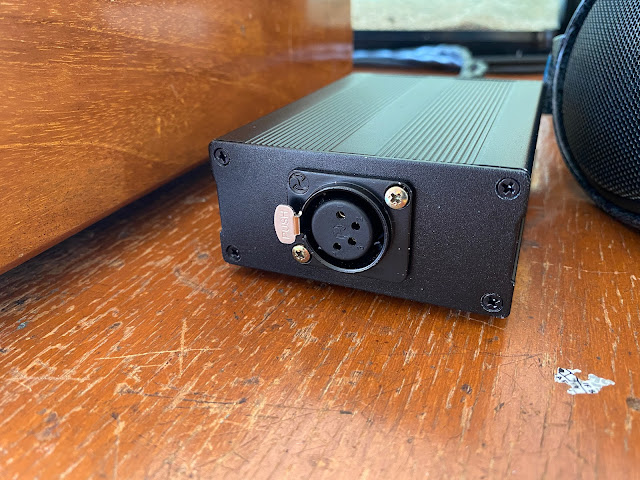
As you can see the finished project is looks really nice. It works perfectly without any issue.
During the listening session, those resistors are not generate any heat at all. This speaker to headphone amplifier adapter is safe to the amplifier, yet to the headphone as well.
The most important things is the sound quality I heard with this vacuum tube amplifier to the headphone is deliver really well, without any frequency shift like when using the speaker.


Disclaimer: Any statement and photos in this article are not allowed to copy or publish without written permission from the writer. Any injury or loss from following tips in this article is not under writer responsibility.
Comments
Post a Comment