IBASSO DX-90 Disassembly & The Capacitor Replacement

It has been a while I am not posting anything in this blog. This is because of my main job schedule is very tight, so I cannot even manage this blog at all. But thankfully I am still having my routine music listening session, probably a few hours a week, with the current audio setup is using the low cost AD1865NK DAC, the LM3875 Gainclone amplifier and SB-acoustic 2-way speaker system. For the digital player is iBasso DX-90 which I have used for very long time.

I am curious what is inside this tiny media player and I have an opportunity to open it up now.


To open this tiny device is easy. But the process needs attention for the small ribbon cable that attach between the top screen cover with the frame.

First things first, I remove the battery cover and 7 bolts underneath.


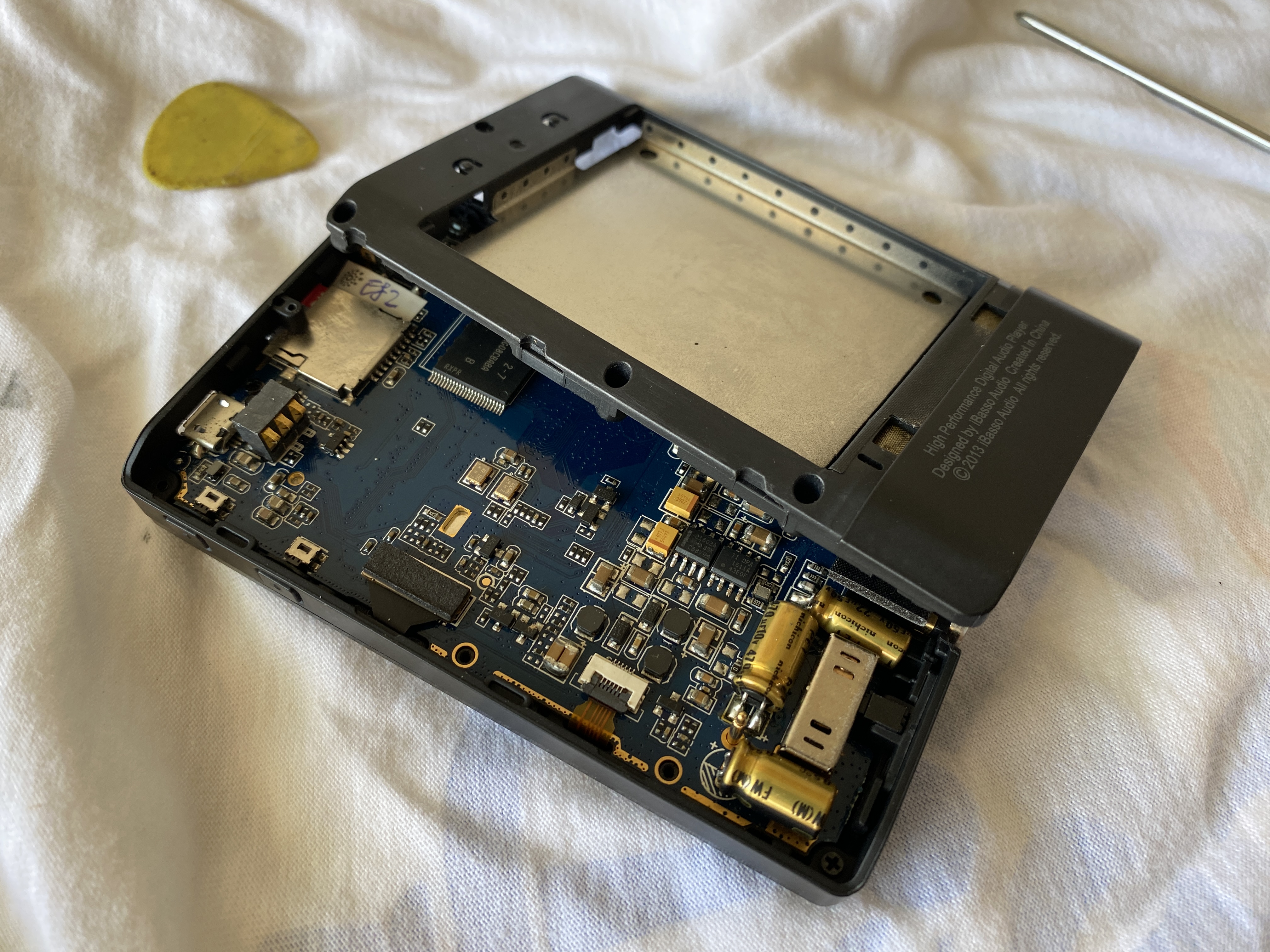
Then I am using the guitar pick to lift the plastic frame detach from the screen casing.


The next step is to remove the PCB from the screen body. There are 2 bolts need to remove first then I need to double check for the cables attached with the socket from the screen to the PCB. The socket need to lift-up gently to avoid any damage.


The PCB design is very neat, with many components inside, I really love to see highly regarded engineering design in this portable device.

I can see dual ESS 9018K2M with many audio grade op-amps such as OPA1611 and BUF634.


I see they are using Nichicon FW capacitors for power supply filters. They are 4 pcs 22uf/50v and 2 pcs 470uF/10v which are okay and doesn't need to replace, but since I had the 22uf Elna Silmic, I did it anyway.

It won't affect the sound quality especially if I only use it as digital transport.


It is all I can share for the internal iBasso DX-90. Such a neat design and lots of high-grade audio components.

Disclaimer: Any statement and photos in this article are not allowed to copy or publish without written permission from the writer. Any injury or loss from following tips in this article is not under writer responsibility.

Comments

Popular posts from this blog

OPA1622 Vs. OPA627 High Performance Op-amps Comparison

This op-amps comparison topic is actually boring, but at the same time, many of us still curious about what others think about it. The reason is simply because of the op-amps variation are hundreds and they are depends by the implementation. The op-amps are considerably cheap and an interchangeable electronic components but they are not built for the same function. So in this discussion, I will focus on the modern Vs. vintage high performance op-amps in the simple non-inverting pre-amplifier gain stage.

Vintage Multibit R2R DAC Tier List

At the very beginning of this year, I committed to explore the best multi-bit R2R DAC. This is simply because I have plenty of the resources (from broken old unit CD player of course) and ability to build them up. If you think this kind a recycle from old un-used unit to become something useful, than I should stated myself giving contribute for greener world:) After all DAC that I built in this year, I think it is better for me to list them up again in one single page like this. Then I will rank them up in a simple tier list. The reason for this, so you all know what my opinion about of those vintage multibit R2R DAC especially in the sound quality.

What Mazda Bose Centerpoint Does to The Music?

It has been a month since I bought and use this brand-new Mazda CX-5 as my daily cars. No doubt for the car performance, this is one of the most reliable, yet very comfortable car to drive. This Mazda CX-5 is the Elite version with 2.5-liter engine and package with Bose  audio system as a "bonus" features. This is car is very interesting, I will try to explain it from my own perspectives as a casual user, especially for the Bose audio system. Early disclaimer, I listening to this Bose audio system and in my opinion, the overall sound quality is not very special. Surprise, surprise! The sound quality is average but for sure better than most cars with non-audio brand collaboration. Let's deep down to it.