This is the post I made for closing this year.
Such a beautiful years with lot of new experienced especially when I made a DAC with the vintage multibit DAC IC.
The latest DAC I made is a clone from Nakamichi Dragon DAC and I named it "the Dragon DAC". The overall result is surprisingly good and I can now stop thinking about building another new DAC with new concept using the vintage multibit DAC since all of them are already done.
This post is just an update from my previously built, the Dragon DAC, with some components added and changes for the sake of an improvement.

The next step after I confirm that this DAC built are as per my expectation, then I can invest more on the other supporting components to make the circuitry inside more stable and better.
I will start from adding additional decoupling capacitor to each op-amps voltage pins for the stability. Previously for each of the op-amps voltage input pins are having their own 100 nF decoupling capacitor. By default those capacitors are enough but for better performance, adding another 22uF capacitor for each pins, parallels to each existing decoupling capacitor might be better to avoid the possibility of oscillation problem.


At this stages, I also recalculating the R-C network for the -3db LPF circuitry. My previous calculation is based on the original Nakamichi Dragon DAC which in my opinion when changing from the oversampling to the non-oversampling DAC like I did in here, then the same calculation will not be suitable.
So my new LPF calculation is cutting the frequency at 22 kHz instead of the original is at 96kHz.

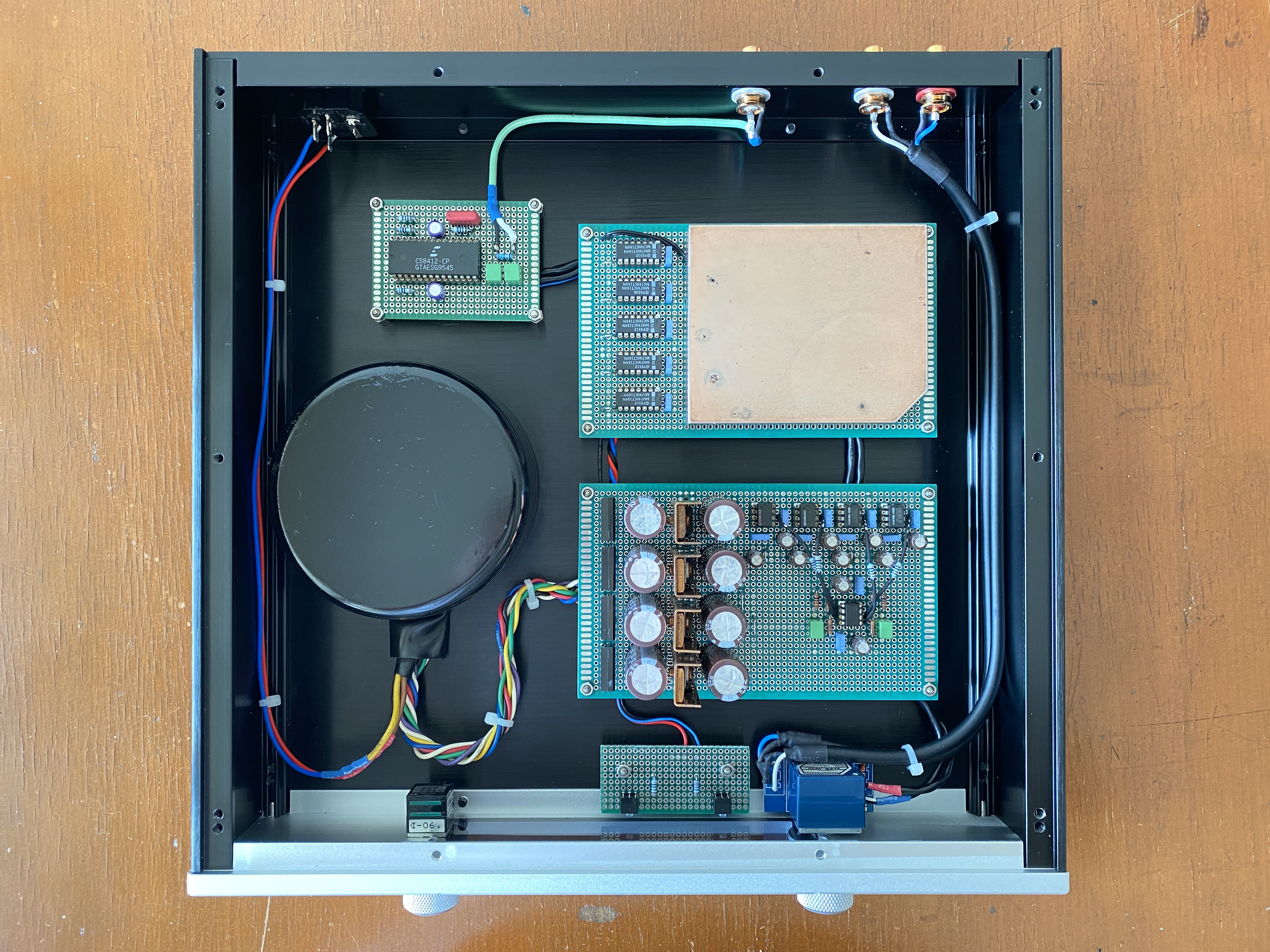
Others than that, I tidy up the layout and the point-to-point connection, so they are shorter from one point to another, especially in the power supply circuitry and current output from DAC to the analog stage.
I also put another additional decoupling capacitors on the power supply section and on the each PCM1704 DAC IC as well.


This new layout in my opinion are better to look at.
It is also better in the sound quality result as well.
I prepared to having a great holiday ahead, listen to the music all day long with this DAC.
Disclaimer: Any statement and photos in this article are not allowed to copy or publish without written permission from the writer. Any injury or loss from following tips in this article is not under writer responsibility.
Comments
Post a Comment